Feature: Beyond the Bottle - The Importance of Grapes in Turkey

This month in Turkey the highest and coolest vineyards are completing their harvest. Last year we had a look at how people celebrate the ancient ritual of the grape harvest. Whether or not we participate in harvesting the grapes, most of us also celebrate it…albeit some months later when the wine is finished. This year, we’d like to go beyond wine and think about the cultural impact of grapes in Turkey and on Turkish cuisine.
Turkey Is One of the World’s Largest Grape Producers
Turkey is a land of vast agricultural richness. Fruits, vegetables, nuts, grains, tea, and more flourish across the country. That includes grapes. We’ve talked before about how Turkey has more native grapes than any other country. Not only is there variety, they're grown in quantity.
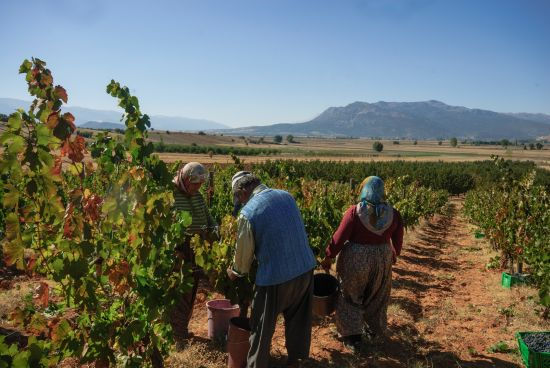
With over 400,000 hectare (989,000 acres) planted to grapes, Turkey is 6th globally in vineyard land*. In 2024, almost 3.5 million tons of grapes were picked here. While both vineyard area and grape production have fallen over the last few years, we still rank 7th globally in grape production.
Only about 3% of all those grapes are used for alcohol, both wine and rakı, production. Where do the rest of all those grapes go?
Grapes and Turkish Food Culture
For those familiar with modern Turkish food, you might be surprised to learn how large a role fruit used to play in the cuisine here. This is especially surprising if your experience is limited to a few of the basic kebabs offered in Turkish restaurants abroad.
We’re not talking only about desserts, although fruit had a role there too. Fruit—both fresh and dried—frequently appeared in savory foods. Such dishes largely harken back to the kitchens of the Ottoman palaces. Cooks commonly prepared meat and vegetable dishes with pilav (rice) or with fruit.

Yes, that sounds a little weird to the American palate. Quince, plums, grapes, and apples in stews or stuffed with lamb? Dried apricots, raisins, dates, and currants in rice? These weren’t Iron Chef secret ingredients cooks had to incorporate, they served a real purpose. Fruit could help balance a dish by providing acidity, tartness, sweetness, texture, or fragrance before globalization and modernization made citrus juice and zest, sugar, tomatoes, and certain spices available.
That’s not to say, though, that fruit’s purpose was solely substitutive. Some additions of fruit were a deliberate choice. Fruit can contribute several of these elements simultaneously. Modern cooking tends to obtain those components from separate ingredients.
If you wandered into an Ottoman dinner party, you might find such dishes as:
İç pilav: rice pilaf with pine nuts and raisins or dried currants
Kris: lamb and walnut rice with meatballs
Mülebbes dolması: eggplant dolma with meat and grapes

While Turkish food today more heavily emphasizes things like vegetables, grains, legumes, yogurt, peppers, tomatoes, herbs, and olive oil, there are still a few places that commonly use fruit, and specifically, grapes.
İç pilav: Still popular today, especially around New Year, although now more commonly made with currants than raisins
Pekmez: Fruit molasses can be made with a variety of fruits, but grape pekmez is very common.
Pestil: Think homemade Fruit Roll Ups. Made with a variety of fruits, including grapes.
Cevizli sucuk: Walnut “sausage” is a commonly found sweet in Turkey in which walnuts are threaded together then dipped over and over again into a grape molasses mixture until the “sausage” is formed.
Pekmez especially holds great cultural significance in Turkey. Not only has it historically been used as a sweetener in both savory and sweet dishes (although that has largely been replaced by sugar and honey), tahin-pekmez is a breakfast addition most Turkish people cherish. A blend of tahini and pekmez, this is one of the dishes served with serpme kahvalı, the traditional Turkish breakfast spread that all visitors to the country must indulge in at least once. Tahin-pekmez isn’t as common nowadays, but many Turks still have fond childhood memories of slathering hunks of soft, white bread with the nutty-sweet-grapey mixture.
The Leaves Get In On It Too
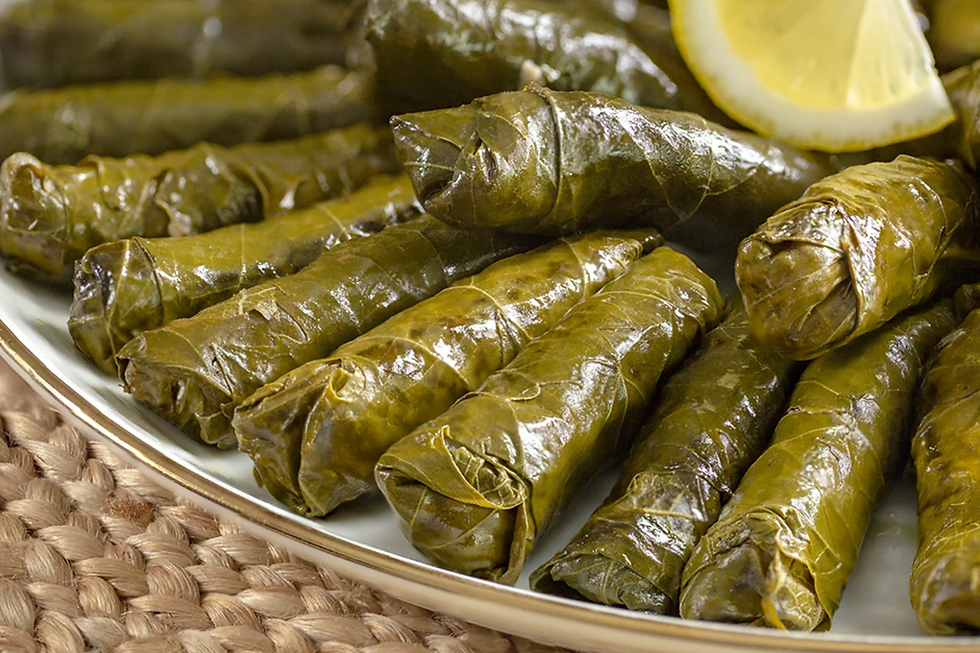
The fruit isn’t the only valuable part of the vine, the leaves (yaprak) are also valuable. If you read our post about the jewel of the Black Sea, Narince, you’ll remember that that grape in particular is especially prized for its leaves. And it’s not only Narince grapes. A number of varieties, including this month’s featured variety, Erciş Karası, are grown for both fruit and leaves.
Most people will know yaprak sarma, stuffed grape leaves. These are very popular even in modern cuisine and there is quite a variety. Spiced rice (on its own), rice with dried currants, rice with sour cherries, meat and rice…the list goes on.
Beyond that, there are less common dishes like yaprak pidesi, a kind of herbed bread baked between grape leaves and asma yaprağı barbun, a barbun (type of small fish) wrapped in grape leaves.
If you can wrap something in a vine leaf, people do. You can buy the leaves fresh and preserve them yourself. You can also buy commercially produced vacuum-sealed vine leaves or, always the best, jarred prepared leaves from a farmer’s market.

Grapes Into Gold
Grapes play a large role in the Turkish economy as well. Turkey exports fresh grapes, grape juice, pekmez, and preserved leaves. But the real money is in raisins.
Raisins are one of the country’s largest agricultural exports. On average, Turkey annually exports roughly 206,000 tons of raisins earning companies a staggering $599 million**.
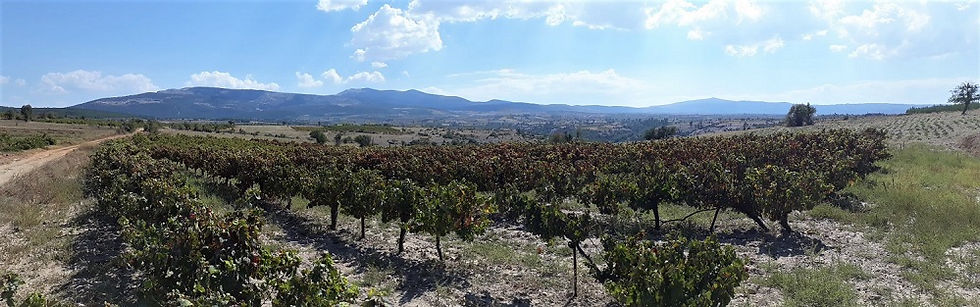
Like the leaves, many different varieties are used to make raisins. Yet the vast majority used are Sultaniye, aka Sultana, aka Thompson Seedless. Traversing the Denizli plateau in the inner Aegean is a little bit of a mind trip if you don’t already know the scale of grape production in Turkey. Commercial Sultaniye vineyards spread out all around, mile after mile of vines flashing by as you drive though. These are not the picturesque, old, dry-farmed bush vines of nearby Çal. Vineyards here are trained on wires and irrigated for maximum fruit production. With production at this level, hand harvesting isn’t practical, making this area house some of the country’s only mechanized vineyards.
From table grapes, raisins, molasses, juice, and grape leaves to wine and rakı, grapes play a huge role in Turkey’s economy, culture, and cuisine. This autumn, while sipping one of the delicious wines we stock, consider how amazing it is that this simple fruit is capable of so very much.
As always, you can enjoy and purchase a wide variety of Turkish wines at the Fine Turkish Wine Bottle Shop + Tasting Room, located in Houston's Montrose District at 1909 Dunlavy Street.
Andrea Lemieux is an international wine expert with particular expertise in Turkish Wine. She is the author of The Essential Guide to Turkish Wine, the world's only comprehensive English language book on Turkish wine. She is also the author of The Quick and Dirty Guide to Greek Wine and the founder of The Quirky Cork website which is dedicated largely to Turkish wine.


Comments