Turkish Wine Selection: Osmanca

In our month-by-month tasting plan, June is dedicated to a grape not even many people in Turkey know well…or at all: Osmanca.
Meet Osmanca
Osmanca is a rare, indigenous, white grape from Turkey’s Aegean region, and despite having been long overlooked as a wine grape, it has continued to thrive in vineyards a mere stone’s throw from the famous ancient Greco-Roman city (and massive tourist destination): Ephesus.
This is one of those grapes that owes its continued existence to village vineyards and its multi-purpose nature. Very few Turkish villagers go through the back-breaking work of keeping up a vineyard for sentiment or in the hopes that a winery will come along and want to buy their grapes. People have traditionally eaten Osmanca as a fresh table grape and used it for making raisins and molasses. The delicate leaves are also popular for use in food production.
Osmanca has only recently begun to step out of the shadows of obscurity. Its emergence is owed to Selçuk-based winery, Akberg. When Güney Köse took over Akberg in 2020, he made a major shift from bulk and aromatized wines to quality fine wine production. His series, Büyükbağ, meaning “great vineyard,” captures his philosophy that Turkey itself is his vineyard. Güney and Akberg approach this in two ways:
One: they believe a grape grows where it originates for a reason, so they don’t transplant vines to their own vineyards. Taking a grape from a high-altitude, cold location with volcanic soil, for example, and planting it in low-lying, clay soils in a Mediterranean climate would significantly impact not only its growth, but the character of the wines it makes.
Two: Güney and Akberg actively look for lesser-known or entirely unknown grapes to re-invigorate. That’s how they found Osmanca, which was coincidentally, growing right in their own back yard. So to speak.

According to the Vitis International Variety Catalogue (VIVC), Osmanca is a synonym for a Greek-originating grape, Korithi Apsro which goes by several names in Greece, including Korothi Lefko and Asprakoritho among others. It also may be known in Italy as Turca Bianca, Uva di Smirne (which indicates a Turkish origin), Turchesa, Monarcha del Vesuvio, and a slew of other names.
In the Vineyard
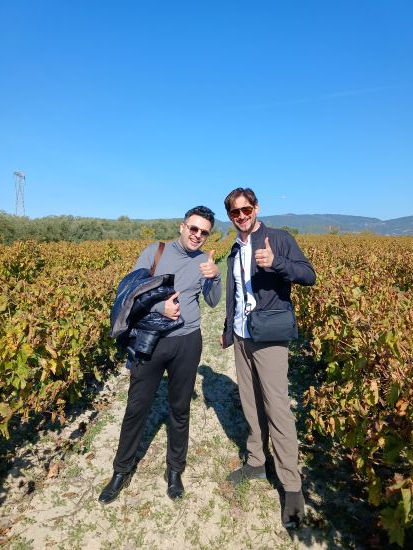
Osmanca grows (and likely originates) in the clay-loam soils of Selçuk and Gökçealan. Vineyards sit at an average 525 feet above sea level and roughly 10 miles from the shores of the Aegean Sea.
Vineyards here tend to be on the older side, full of goblet (aka bush) vines ranging from 30 to over 60 years old. Osmanca berries are medium to large, thin-skinned, and naturally high in sugar. They’re also apparently very attached to their stems, no pun intended. Even as stems dry out, berries cling tightly and don’t naturally drop off.

The variety has some natural resistance to disease due to its loose bunches and ability to take advantage of breezes from the nearby sea which help keep vineyards pest free.
In the Winery
While not so sensitive in the vineyard, Osmanca is a little bit difficult to work with in the winery. The juice tends to oxidize quickly. In order to mitigate this problem, Akberg picks in the early hours of the morning and, in some vintages, keeps the grapes in cold storage to stabilize before winemaking.
Güney's gambit has proven fruitful, quite literally, as the grape has demonstrated a wonderful versatility. Akberg began with a classic white wine, fermented in stainless steel for its first Osmanca vintage in 2021. Knowing the variety naturally develops significant sugar content, Akberg then tried a sweet wine. Next came barrel aging. Its newest release from the 2025 vintage now also includes a “natural” Osmanca with light skin contact, fermented with native yeasts.
Osmanca is aromatic but restrained. Medium-bodied, but with texture and vibrant acidity. Look for a wide range of flavors in Osmanca wines, including pear, quince, melon, white flowers, exotic flowers, green tea, lemon balm, basil, and fennel.
Osmanca Wines to Try
At the moment we only have one Osmanca to offer, although we look forward to expanding that soon - we're very excited a bout bringing in the new natural skin contact Osmanca, so stay tuned! But the Büyükbağ Osmanca we current carry is indeed one of our favorites!
Grapes for this wine were crushed immediately upon arrival at the winery and juice fermented from the mark before fermenting in stainless steel vats. The resulting wine saw no barrel, and only limited fining and filtration prior to bottling in order to provide the purest expression of Osmanca’s true nature.

Bright, citrus-forward aromas reminiscent of pomelo, grapefruit peel, and lemon balm accompanied by notes of flowers, fennel, basil, and a hint of sea spray. The palate offers more citrus in the way of kumquats along with Asian pear flavors, again fennel, and some salinity wrapped in lively acidity.
Akberg Büyükbağ Osmanca: This wine is fruits, flowers, aromatic herbs, and everything in between! Expressive yet elegant, with delicate dried white blossoms layered with ripe peach and stone fruits. Soft notes of lemon balm and basil with fennel detail wrap around a core of pear and quince alongside zesty lifted notes of dried lemon peel. Savory green tea tannins and bright acidity with a bold yet light-medium body and a long clean floral finish beg you to go back for another sip.
As always, you can enjoy and purchase this wine and many more at the Fine Turkish Wine Bottle Shop + Tasting Room, located in Houston's Montrose District at 1909 Dunlavy Street.
Andrea Lemieux is an international wine expert with particular expertise in Turkish Wine. She is the author of The Essential Guide to Turkish Wine, the world's only comprehensive English language book on Turkish wine. She is also the author of The Quick and Dirty Guide to Greek Wine and the founder of The Quirky Cork website which is dedicated largely to Turkish wine.


Comments