Feature: Exploring Turkey's Wine Routes - Çal Bağ Yolu

Turkish winemakers today are increasingly interested in making terroir-driven wines with native and international varieties and celebrating both the commonalities and diversity in their respective regions. One of the ways they are doing this is by banding together in regional organizations and wine routes.
The Wine Routes of Turkey
As of the time of this writing, Turkey is currently home to six wine routes. They span three regions: Thrace, Marmara, and the Aegean, and include: Trakya Bağ Rotası, Urla Bağ Yolu, İç Ege Bağ Rotası, Güney İzmir, Çal Bağ Yolu, and Lidya Antik Bağ Yolu.
For the most part, these are loose associations of wineries within the same geographic area. Some, like the Trakya Bağ Rotası and the İç Ege Bağ Rotası cover huge areas, and in the former case, several geographic regions.

Each route offers unique flavors and opportunities to visit wineries, explore the country’s gastronomy, and even enjoy each region’s more traditional tourism.
Visiting the Çal Bağ Yolu
The Çal Bağ Yolu formed to promote the wines of the Çal district in Denizli. Home to Turkey’s Cinderella grape Çal Karası, wineries here are putting more and more effort into creating higher quality bottlings and improving the reputation of the area’s wines.

Accessing the Çal Bağ Yolu requires something of a commitment. The nearest airport to wineries on this route is the Adnan Menderes Airport (ABD) in Izmir. While it offers multiple flights daily from Istanbul; its international destinations are limited largely to Europe and the Middle East. That’s just step one. Çal is a further three-hour drive from Izmir.
One option that offers a more rewarding overall experience is to incorporate it into a trip to Pamukkale. The world-famous limestone travertines with crystalline-clear blue water and ancient ruins appear on many a Turkish travel bucket list. Çal is a mere hour’s drive from here, meaning one can easily visit two or three of the wineries on a day trip.
One of the drawbacks to this particular wine route is that there are no hotels in Çal. In fact, Pamukkale offers some of the nearest options for accommodation. Until the Çal Bağ Yolu expands and can offer more dining and any accommodation options, combining a visit with a trip to Pamukkale makes the most sense.
Expert Tip: a less well-known but truly fantastic archeological site, Aphrodisias is a little over an hour drive from Pamukkale and well worth it if you are into such things.
Çal Bağ Yolu Members
Member Wineries include:
Erdel/Hanchalar
Ezel
Küp
Kuzubağ Şaraphane
Lermonos
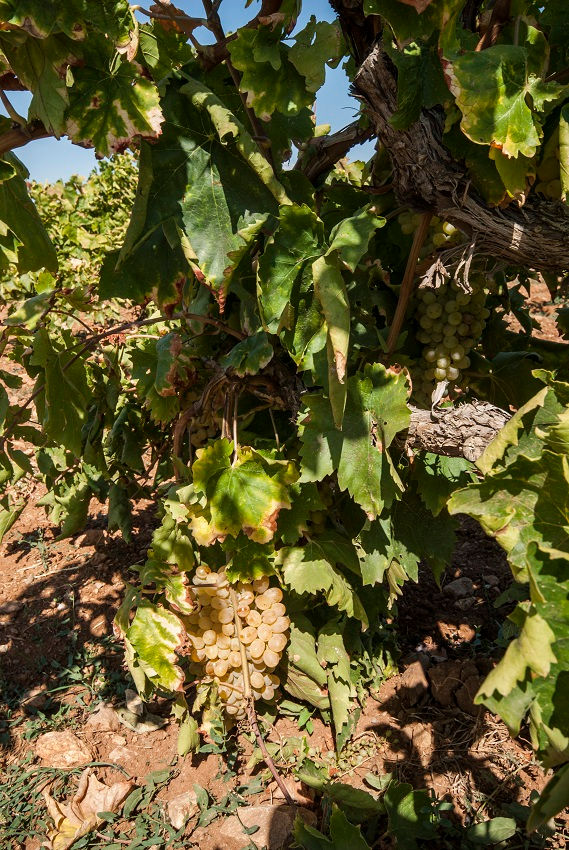
Erdel/Hanchalar has a unique story among Turkish wineries. The Kuzu family established Erdel Winery in the late aughts and have been busy ever since making bulk wine and private labels for cafes and restaurants across Turkey. After a particularly good harvest, Erdel produced a wine of significantly higher quality than the company’s previous vintages.
It was during this vintage, while noting the considerable difference between it and the winery’s previous offerings, that two things happened for the founder’s daughter Seray; a new interest in wine bloomed and she created Hanchalar. Named for the Kuzu family’s home village Hançalar, which is part of the Denizli district of Izmir, Seray describes it as a “boutique label but not a boutique winery.”

Ezel Family Vineyards is something of a rarity in Turkey, a bulk winery with heart. After retiring from the army in 2006, Mehmet Altısın packed up his family and moved them to Çal where he invested his life savings in building a winery. Named for his two daughters (Ezgi and Elif), Ezel Family Vineyards cultivates a mix of native and international grapes on its 500-hectare estate, producing some two million liters of wine a year.
Despite its large size, the Altısın family is involved every step of the way with each of their wines. Mehmet oversees the vineyards and general winery operations while his eldest daughter Ezgi works alongside their consulting winemaker, learning the ropes with a view to taking over winemaking and operations in the future.

Founded in 1959, Küp Şarap has grown from a small-scale producer making wine in 600-litre capacity clay vases from which the winery takes its name (küp is Turkish for ‘amphora’), to become a multi-million liter powerhouse. Today, the modernized winery averages 4 million liters a year with multiple labels offering native and international grape options.
Among the Çal Bağ Yolu members, Kuzubağ stands out not only for producing some fantastic wines, but for doing so with a clear sense of identity: family roots, native grapes and terroir, strong female representation, and excellence at accessible prices. Owned by the Kuzu family (relatives of those behind Erdel/Hanchalar), the winery—one of the most beautiful in the country—is surrounded by vineyards, old bush vine Çal Karası and more modern plantings of other native and international grapes.
What truly defines Kuzubağ however, is its powerful female leadership. Asli Kuzu has become the public face of and the driving force behind her family’s winery, while winemaker Semril Zorlu leads production, supported by Merve Gürcanoğlu. Even the brand’s visual identity reflects this influence, with labels designed by Elif Tanman.
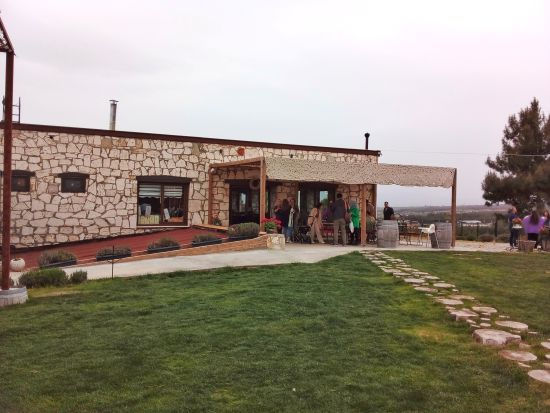
Lermonos was born out of Hürriyet Yılmaz’s childhood memories. Originally from the Aegean region, Hürriyet grew up spending holidays with her grandmother and in her Denizli vineyards. Her work on Lermonos began almost 20 years ago with the winery’s first vineyards planted in Hançalar, the village neighboring Çal. Now, she has 28 hectares of Çal Karası, Kalecik Karası, Öküzgözü, Bogazkere, Chardonnay, Sauvignon Blanc, Merlot, Syrah, and Cabernet Sauvignon.
Why Is Wine Tourism So Underexplored in Turkey?
There are several reasons that wine tourism is still largely unexplored in Turkey. Advertising alcohol is illegal, which means advertising wine tastings in tourism brochures is also a no-no. Wineries navigate this by advertising "vineyard tours" but campaigns are still small and cautious.
For capturing international tourism, Turkish wine tourism faces other challenges. There are only a few international or domestic tourism agencies like Vines & Pearls that offer wine tours, but tourists have to know that Turkey even has a wine industry to look for those. The high cost of alcohol and general inflation which has made everything in Turkey, especially fuel and services like rental cars and tour guide services, skyrocket over recent years, makes guided wine tours feel prohibitively expensive for many.
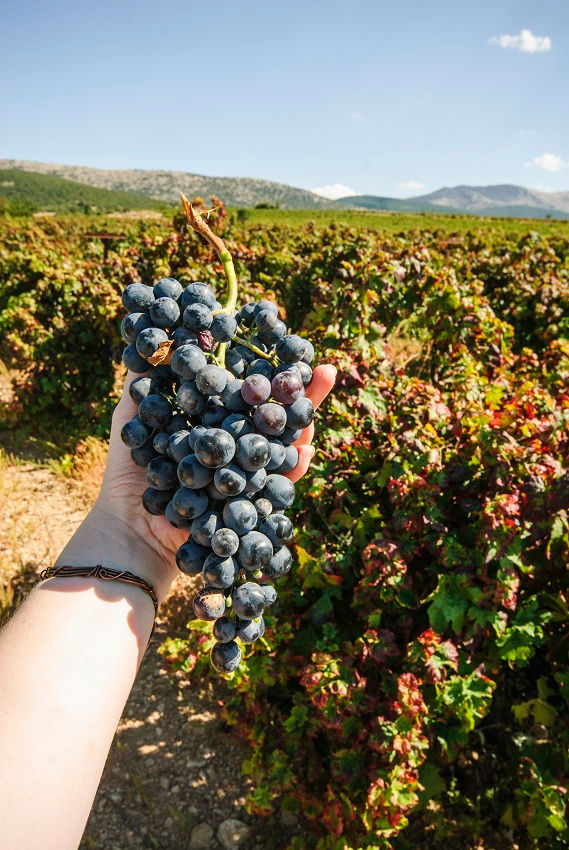
While it is entirely possible to visit wineries without a guide, some people hesitate to drive in foreign countries, worry about tasting then driving, or have communication concerns, as not every winery in Turkey has English-speaking staff available.
Planning a Visit to a Winery in Turkey
Especially because wine tourism is a new concept in Turkey, there are a few things you should check before rocking up at a winery here.
Where is the winery?
This seems like a really basic question but the reality is often not so simple. Google Maps is pretty accurate in Istanbul, Izmir, Ankara, and other big cities. But that’s not where the wineries are. Wineries are often located on roads Google doesn’t think exist or in places you would least expect-like an industrial complex (this is true, several are). Make sure you have a good idea of where you’re going before you set out.
Do you need a reservation?
Almost always, yes. Not all wineries in Turkey, not even those part of the wine routes, regularly accept visitors. And the places that do are very popular so you might not get a table if you don’t book in advance.
Can visitors see the production rooms?
This depends a lot on the specific winery and how busy it is when you go. Not everyone has staff dedicated for tours of the production rooms and vineyards so it’s a good idea to ask this when you make a reservation.

Does the vineyard offer wine tasting?
Again this might seem like a silly question. Once again, the reality in Turkey does not always reflect the obvious. Many wineries do offer set tastings but not all. Again, ask when you make a reservation.
Are wine tastings free?
No, there is usually a fee.
Do you have the option to buy wine?
Yes, absolutely. Usually at a lower price than retail.
Does someone at the winery speak English?
Like the answer to most of these questions, the answer is: it depends. Probably calling to try to make a reservation will be your first clue! When in doubt at the winery, smile. Turkish hospitality is real and wine people will be happy for your visit whether or not you can communicate verbally!
Do wineries that are not part of one of these wine routes accept visitors?
Yes. The majority of wineries in Turkey accept visitors regardless of whether they’re part of an official wine route or not, so it’s also worth looking into visiting wineries in other parts of the country like Cappadocia, Bodrum, Mardin, Elazığ, Bozcaada, and Ankara.
Can’t visit Turkey this year? Explore the Çal Bağ Yolu from the comfort of your home with wines from our partner Kuzubağ!
Andrea Lemieux is an international wine expert with particular expertise in Turkish Wine. She is the author of The Essential Guide to Turkish Wine, the world's only comprehensive English language book on Turkish wine. She is also the author of The Quick and Dirty Guide to Greek Wine and the founder of The Quirky Cork blog which is dedicated largely to Turkish wine.


Comments