Turkish Wine Selection: Papazkarası

In our month-by-month tasting plan, we’re dedicating September to the delightfully versatile grape Papazkarası. September is a transitional month, it’s still warm (and in some cases hot!), but nights are getting a little cooler. A bit too early for hefty reds, we find a perfect transition past those summer whites or rosés with Papazkarası.
Meet Papazkarası
You’ve met a few ‘karası’ grapes now and we’ve talked about how many of Turkey’s black grapes are named after their place of origin. Çalkarası is the ‘black of Çal’, Kalecik Karası is the ‘black of Kalecik’ and so on with grapes like Erciş Karası, Foça Karası, Merzifon Karası and more. Papazkarası breaks that pattern a little.

Papaz is the Turkish word for pope or priest, making this the ‘black of the pope’. The story goes that this ancient grape with a history that stretches back at least 1,500 years, made the wine favored by the Constantinople-based popes of the Byzantine era.
You’ll see this spelled two different ways, Papazkarası—with a z—and Papaskarası—with an s. Papas is the transliteration of the Greek παπάς (also meaning pope or priest). Some wineries use the Turkish spelling, others use the Greek and they’re all pretty passionate about which one they use.
In the Vineyard
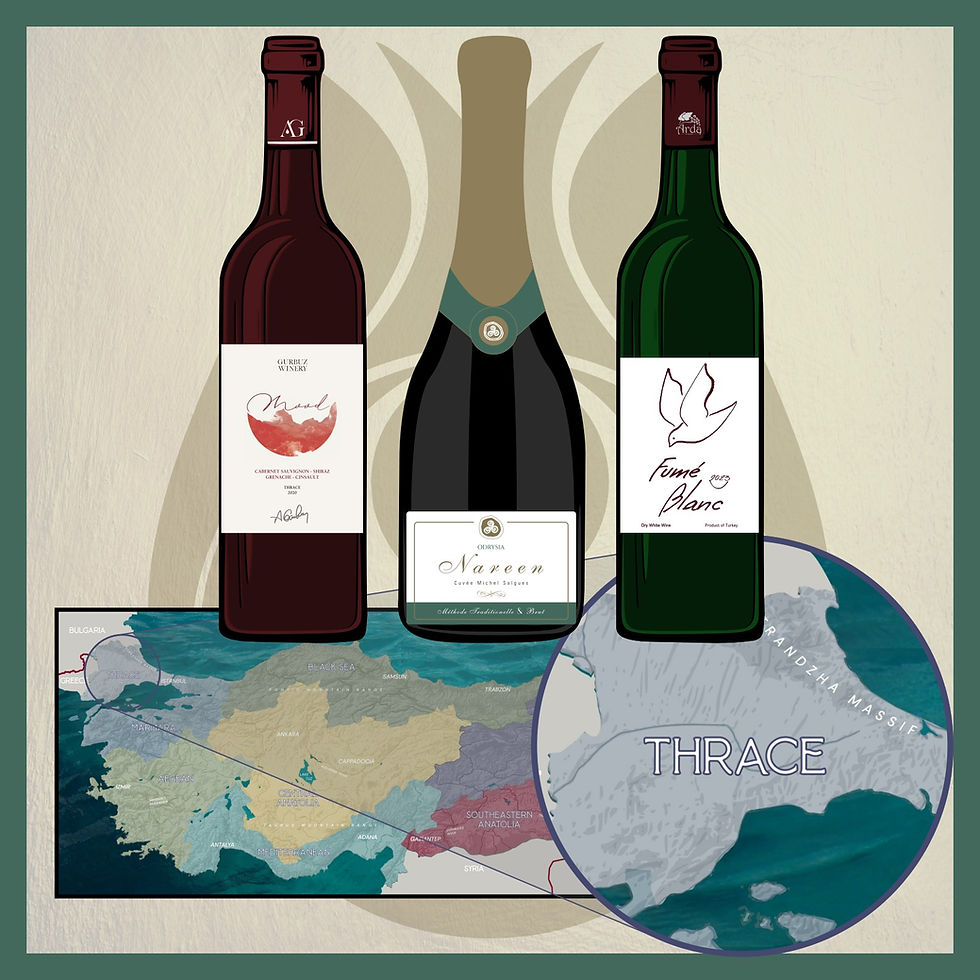
Papazkarası is native to Turkey’s Thrace and is believed to have originated from the natural cross-pollination of two Balkan grape varieties: the Serbian black grape Prokupač and the Romanian white grape Alba Imputotato. Papazkarası grows mainly in Turkey’s upper Thracian region from Edirne in the west near the Bulgarian border to Kırklareli in the east near the Strandja Massif.

While some new plantings with modern trellising are appearing in vineyards, the majority of Papazkarası vines are older bush vine (or goblet as they’re more commonly called in Turkey) plots 30-40 years-old and older. These are generally small holdings farmed by families and other independent growers.
The grape grows best in clay-loam soils and dry conditions. These older plots especially are dry-farmed—no irrigation—and it’s not unheard of for them to even be own-rooted, what’s called tatlı kök (sweet root) in Turkish. This seems to be especially common in the areas to the west where phylloxera isn’t a concern. Phylloxera already doesn’t care for sandy soil, and the combination of sand and slope equals excellent drainage which washes larva off the roots.
Grapes are medium-sized, with blue-black berries. They grow tightly packed together on medium to large bunches and vineyard workers have to keep an eye out for vineyard diseases and molds as no airflow gets into the bunches.
There are a few different clones growing around upper Thrace. Some give paler, medium-bodied wines with moderate alcohol, while others result in fuller-bodied, more alcoholic wines with deeper color.
In the Winery
Papazkarası wines are aromatic with aromas and flavors of red and black fruits, olives, purple flowers, pepper, and spice. Red wines tend to be on the paler color side but with structured tannins and bright acidity.
As we said, this is a delightfully versatile grape. It’s medium-bodied wines don’t need oak to be amazing, and yet it does take well to oak aging. Papazkarası can also be made into bright rosés with red fruits and savory tones as well as lively blanc de noir white wines.
Excitingly, one winery is now making Papazkarası into traditional method sparkling wine. Happily for all of us, it’s one of our partner wineries Odrysia, and we’ll have their new traditional method sparkling Papazkarası in stock soon!
Wines to Try
We love Papazkarası and have multiple wines for you to enjoy.
For the blanc de noir and rosé wines we have:
Aromas of olives and zesty citrus fruits introduce this white wine made from the local black varietal: Papaskarası. Juicy meyer lemon and green apple flavors merge with a briny tanginess lending balance to delicate dried floral notes, bright acidity, and a silky olive oil finish. A complex wine nevertheless suitable for easy drinking. Pairs well with light dishes and Mediterranean flavors often found in Turkish meze.
This white wine made from a local black grape variety shows a rosy peach hue, highlighting white peach, red cherry, and strawberry aromas. Fresh white and red fruits on the palate complement lime rind and whispers of light florals, finishing with hints of green olives and a dark olive brininess over a wonderfully textured mouthfeel, indicative of the blanc de noir winemaking style.
Gala Rose by Arda (sold out as of this writing, but the new vintage will arrive shortly!)
Youthful and vibrant with expressive tart cherry, lemony acidity, melon, white peach, strawberries, and a slight spice note of white pepper, all rounded with sweet and floral aromas of fresh summer fruits and lavender along with undertones of fresh greens and balancing minerality. Slight tannin adding structure for an easy drinking yet more complex and versatile rosé.
We begin our reds with the last of the last wine in the Arda Gala series and also feature wines from Gurbuz and Odrysia.
This lovely dry red wine made from the local Turkish black varietal, Papazkarası, begins with aromas of dried flowers and potpourri along with intense earthiness over black pepper spices. The palate brings gorgeous bright red cherry, crushed raspberry, and red currant flavors, cut with savory white pepper and olive brine, all rounded with a subtle musk and silky tannins to establish this medium bodied wine with a gorgeously long balanced toasty finish.
A wine driven by ripe cherry and black currant with notes of olive and tree bark, rounded out by smooth smokey vanilla and finished with a long rich earthiness. Can nicely compliment meaty or mushroom dishes and balsamic sauces.
This is a gorgeous blend of two local Turkish varietals: Papaskarası & Öküzgözü. Delightfully balanced displaying notes of red cherry and pomegranate, enlightened by herbal tones of cardamom and eucalyptus with undertones of tamarind that lead to a wonderfully lasting finish.
As always, you can enjoy and purchase this wine and many more at the Fine Turkish Wine Bottle Shop + Tasting Room, located in Houston's Montrose District at 1909 Dunlavy Street.
Andrea Lemieux is an international wine expert with particular expertise in Turkish Wine. She is the author of The Essential Guide to Turkish Wine, the world's only comprehensive English language book on Turkish wine. She is also the author of The Quick and Dirty Guide to Greek Wine and the founder of The Quirky Cork website which is dedicated largely to Turkish wine.


Comments